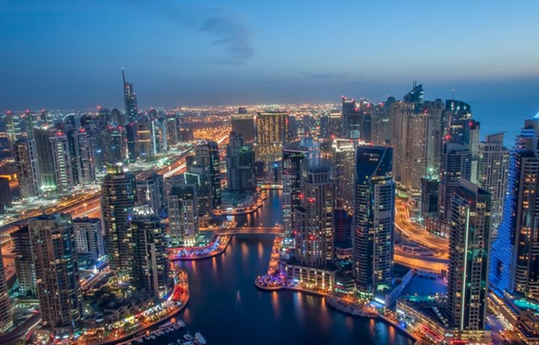
The global real estate landscape is evolving rapidly, and few markets have captured international attention as dramatically as Dubai. Once a desert outpost, Dubai has transformed into one of the world’s most dynamic property hubs—characterized by rapid development, investor-friendly policies, and strong global demand.
Meanwhile, the United States, despite being one of the largest and most sophisticated real estate markets in the world, faces persistent challenges: housing shortages, regulatory complexity, rising costs, and slow construction cycles.
The contrast between these two systems offers valuable insights. Dubai’s real estate model is not perfect, but it demonstrates a level of efficiency, innovation, and alignment that the U.S. market can learn from. This article explores the key lessons U.S. real estate stakeholders—developers, policymakers, and investors—can draw from Dubai’s approach.
Understanding the Structural Differences
Before exploring lessons, it is important to understand how fundamentally different the two markets are.
Dubai operates within a highly centralized governance system, where real estate policy, regulation, and execution are closely aligned. The government actively shapes the market, ensuring that development aligns with economic goals.
In contrast, the U.S. real estate system is decentralized. Regulations vary across federal, state, and local levels, often creating complexity and delays. Developers must navigate zoning laws, environmental regulations, and permitting processes that can significantly slow down projects.
These structural differences form the foundation for the lessons discussed below.
Lesson 1: Streamline Regulation and Reduce Fragmentation
One of the most significant advantages Dubai has is regulatory efficiency. The market is overseen by centralized authorities that enforce consistent rules and timelines.
In Dubai, laws are designed to ensure that projects are completed on time. If a developer fails to deliver, authorities can intervene, reassign the project, or refund investors through escrow systems.
What the U.S. Can Learn
The U.S. does not need to centralize its entire system, but it can benefit from:
- Standardizing approval processes across states
- Reducing redundant regulations
- Accelerating permitting timelines
Delays in construction not only increase costs but also worsen housing shortages. A more streamlined regulatory environment would enable faster delivery of housing supply.
Lesson 2: Enforce Strong Developer Accountability
Dubai’s system places significant responsibility on developers. Escrow laws require that buyer funds be protected and used only for construction.
This creates a high level of trust in the market. Investors know their money is safeguarded, and developers are incentivized to complete projects efficiently.
What the U.S. Can Learn
While the U.S. has consumer protection mechanisms, they are not always consistent across jurisdictions. Strengthening accountability could involve:
- Mandatory escrow protections nationwide
- Clear penalties for project delays
- Greater transparency in project financing
This would improve investor confidence and reduce risk in large-scale developments.
Lesson 3: Build Faster and Scale Efficiently
Dubai is known for its ability to deliver large-scale developments in remarkably short timeframes. Entire communities—with infrastructure, amenities, and residential units—are often completed within a few years.
This speed is made possible by:
- Coordinated planning
- Fewer bureaucratic delays
- Strong public-private partnerships
What the U.S. Can Learn
In the U.S., construction timelines can stretch for years due to zoning disputes, labor shortages, and regulatory hurdles.
Adopting Dubai-inspired practices could include:
- Pre-approved zoning for high-demand areas
- Incentives for modular and prefabricated construction
- Faster inspection and approval systems
Faster construction would help address the housing shortage more effectively.
Lesson 4: Create Investor-Friendly Tax Policies
One of Dubai’s biggest advantages is its tax environment.
- No annual property tax
- No capital gains tax
- No tax on rental income
This significantly increases net returns for investors and makes the market highly attractive globally.
By comparison, U.S. property owners face ongoing property taxes and other costs that reduce profitability.
What the U.S. Can Learn
While eliminating taxes is unrealistic, the U.S. could:
- Offer targeted tax incentives for new housing development
- Reduce tax burdens on affordable housing projects
- Provide temporary tax relief in high-demand areas
These measures could stimulate investment and increase housing supply.
Lesson 5: Focus on High Rental Yields
Dubai consistently offers higher rental yields than many U.S. cities.
- Dubai yields: around 5–7%
- U.S. prime markets: often 2–4%
Higher yields attract global investors and sustain demand.
What the U.S. Can Learn
The U.S. market often prioritizes appreciation over income. While appreciation is important, improving rental yields could involve:
- Reducing operating costs
- Encouraging mixed-use developments
- Supporting build-to-rent models
A balanced approach would make U.S. real estate more attractive to a broader range of investors.
Lesson 6: Encourage Global Investment
Dubai has positioned itself as a global investment hub by allowing foreign ownership in designated areas and simplifying the buying process.
This openness has attracted investors from around the world, driving demand and growth.
What the U.S. Can Learn
The U.S. already allows foreign investment, but the process can be complex and varies by state. Improvements could include:
- Simplifying cross-border transactions
- Offering investor visas tied to real estate
- Reducing legal complexity for foreign buyers
Encouraging global capital inflows can help fund large-scale developments.
Lesson 7: Link Real Estate with Residency Incentives
Dubai’s Golden Visa program allows property investors to obtain long-term residency.
This creates a powerful incentive: buyers are not just purchasing property—they are securing lifestyle and mobility benefits.
What the U.S. Can Learn
The U.S. has programs like the EB-5 visa, but they are complex and not directly tied to residential property purchases.
A simplified version could:
- Attract high-net-worth individuals
- Increase demand for new developments
- Boost local economies
Lesson 8: Embrace Digital Innovation and Tokenization
Dubai is experimenting with blockchain-based real estate tokenization, allowing fractional ownership of properties.
This lowers the barrier to entry and opens the market to smaller investors.
What the U.S. Can Learn
The U.S. is technologically advanced but slower to adopt such innovations in real estate. Opportunities include:
- Tokenized property ownership platforms
- Digital land registries
- Smart contracts for transactions
These technologies can increase transparency and liquidity in the market.
Lesson 9: Develop Integrated Communities
Dubai’s developments are often master-planned communities that include:
- Residential units
- Schools
- Retail spaces
- Recreational facilities
This holistic approach enhances livability and long-term value.
What the U.S. Can Learn
Many U.S. developments are fragmented, with limited integration between residential and commercial spaces.
Adopting a community-first approach could:
- Improve quality of life
- Increase property values
- Reduce urban sprawl
Lesson 10: Balance Luxury and Affordability
Dubai is known for luxury real estate, but it is also working to expand affordable housing options.
This balance is essential for long-term sustainability.
What the U.S. Can Learn
The U.S. faces a severe affordability crisis. Lessons include:
- Incentivizing mid-market housing
- Encouraging diverse housing types
- Aligning supply with income levels
A balanced market ensures stability and inclusivity.
Lesson 11: Align Real Estate with Economic Strategy
Dubai treats real estate as a core pillar of its economic strategy. The government actively aligns property development with:
- Tourism
- Business growth
- Population expansion
This coordinated approach drives demand and ensures long-term growth.
What the U.S. Can Learn
In the U.S., real estate policy is often reactive rather than strategic.
A more proactive approach could involve:
- Coordinating housing with job creation
- Planning infrastructure alongside development
- Anticipating population trends
Lesson 12: Prioritize Market Transparency and Data
Dubai’s centralized system allows for better data collection and market transparency. Investors can access reliable information about transactions, prices, and trends.
What the U.S. Can Learn
While the U.S. has extensive data, it is often fragmented across multiple sources.
Improving transparency could include:
- Unified national databases
- Real-time market analytics
- Standardized reporting
Better data leads to better decision-making.
Lesson 13: Maintain Flexibility and Adaptability
Dubai’s real estate market is highly dynamic. Policies and regulations are frequently updated to respond to market conditions.
This flexibility allows the city to adapt quickly to global trends and economic shifts.
What the U.S. Can Learn
The U.S. system can be slow to change due to political and regulatory constraints.
Increasing flexibility could involve:
- Temporary policy adjustments during crises
- Faster legislative processes
- Pilot programs for new initiatives
Challenges and Cautions
While Dubai offers many lessons, it is not without risks.
Recent global tensions have shown that the market can be sensitive to external shocks, with transaction volumes dropping significantly during geopolitical uncertainty.
Additionally, Dubai’s reliance on foreign investment can make it vulnerable to shifts in global sentiment.
The U.S., with its large domestic market, has greater inherent stability. Therefore, the goal is not to replicate Dubai entirely but to adapt its best practices.
The Future of Global Real Estate
As globalization continues, real estate markets are becoming increasingly interconnected. Investors can easily move capital across borders, choosing markets that offer the best returns, stability, and opportunities.
Dubai has positioned itself as a leader in this new landscape by prioritizing efficiency, innovation, and investor appeal.
For the U.S., the challenge is not a lack of resources or demand—it is the need for modernization. By learning from Dubai’s model, the U.S. can unlock greater efficiency, attract more investment, and better meet the housing needs of its population.
Conclusion
Dubai’s real estate market represents a bold experiment in what is possible when regulation, innovation, and economic strategy are aligned. Its success highlights the importance of speed, efficiency, and investor confidence in driving growth.
For the United States, the lessons are clear: streamline processes, embrace innovation, incentivize development, and think strategically about housing.
While the two markets operate in very different contexts, the underlying principles of success—clarity, accountability, and adaptability—are universal.