For decades, flying cars have been a symbol of futuristic imagination. From Hollywood movies to visionary predictions, the idea of a vehicle that could seamlessly transition from road to sky has fascinated humanity. What once seemed like pure fantasy is now becoming a tangible reality—thanks to groundbreaking innovation from Slovakia.
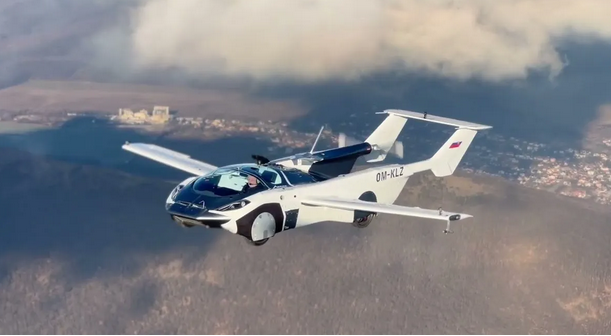
At the center of this revolution is the AirCar, a remarkable hybrid vehicle developed by the company Klein Vision under the leadership of visionary inventor Štefan Klein. This extraordinary machine is not just a concept or experimental prototype—it is a certified aircraft that can also function as a road vehicle.
The AirCar represents a turning point in transportation history. It bridges the gap between automobiles and airplanes, offering a glimpse into a future where traffic congestion could be avoided by simply taking to the skies. This article explores in depth how Slovakia transformed a science fiction dream into a real, functioning flying car, and what this means for the future of mobility.
The Vision Behind the AirCar
The story of the AirCar begins with Štefan Klein, a Slovak engineer and designer who has spent decades pursuing the dream of flying cars. His work dates back to the late 20th century, reflecting a long-term commitment to redefining transportation.
Before the AirCar, Klein worked on earlier prototypes such as AeroMobil. However, he later founded Klein Vision to develop a more refined and practical flying vehicle. His goal was not just to build something that could fly, but to create a usable, safe, and commercially viable transportation solution.
Unlike many experimental flying vehicles, the AirCar was designed with real-world usability in mind. It combines the functionality of a sports car with the aerodynamic capabilities of a small aircraft, making it one of the most realistic flying car projects ever developed.
What Is the AirCar?
The AirCar is a dual-mode vehicle, meaning it operates both as a car on the road and as an aircraft in the sky. It is a two-seater vehicle that can transform between these two modes in just a few minutes.
Key Characteristics
- Functions as both a road car and an aircraft
- Two-seat capacity
- Powered by a conventional internal combustion engine
- Equipped with foldable wings and a propeller
- Designed for both personal and commercial use
The concept is simple yet revolutionary: drive to an airport or runway, convert the vehicle into flight mode, take off, and then land at another location where it can continue as a regular car.
Engineering Marvel: How the AirCar Works
Transformation Mechanism
One of the most impressive features of the AirCar is its transformation system. At the push of a button, the vehicle extends its wings and tail, converting from a car into an aircraft in under three minutes.
This transformation is powered by over 20 programmable servo motors, which precisely control the deployment of aerodynamic components.
Structural Design
The AirCar’s body is built using a carbon fiber composite structure over a steel frame, making it both lightweight and strong.
Interestingly, the car’s fuselage (main body) contributes 30–40% of the lift during flight, reducing the need for large wings and improving efficiency.
Propulsion System
The prototype uses a 1.6-liter BMW engine, capable of powering both road travel and flight operations.
In flight mode, a rear-mounted propeller provides thrust, while the wings generate lift. This hybrid design allows the AirCar to operate using conventional fuel, eliminating the need for specialized infrastructure.
Performance and Capabilities
The AirCar is not just a novelty—it delivers impressive performance both on the ground and in the air.
Flight Performance
- Takeoff speed: around 120 km/h
- Cruising speed: approximately 170 km/h
- Maximum altitude: up to 4,500 meters
- Flight range: about 1,000 km
Road Performance
While exact road specifications vary by model, the AirCar performs similarly to a high-end sports coupe, offering practical usability for everyday driving.
The ability to cover long distances quickly—by combining road and air travel—makes it a unique transportation solution.
Historic Milestones and Achievements
First Flight and Testing
The AirCar made its first successful flight in 2020, marking a major milestone in flying car development.
Intercity Flight
In June 2021, the AirCar completed a 35-minute flight between the cities of Nitra and Bratislava, demonstrating real-world usability.
This was not just a test—it was a proof of concept that flying cars could be used for practical travel between cities.
Certification
One of the most significant achievements came in 2022, when the AirCar received a Certificate of Airworthiness from the Slovak Transport Authority.
This certification followed:
- 70 hours of flight testing
- Over 200 takeoffs and landings
This made the AirCar one of the first certified flying cars in the world, moving it beyond experimental status.
Real-World Demonstrations
The video above shows the AirCar completing its historic intercity flight. After landing, it transformed back into a car and drove into the city—something that perfectly captures the essence of this innovation.
Such demonstrations prove that the AirCar is not just a prototype but a functional transportation system.
Safety Features and Reliability
Safety is a major concern for any flying vehicle, especially one intended for everyday use. The AirCar addresses this through multiple advanced systems:
Built-in Safety Measures
- Ballistic parachute system for emergencies
- Stable aerodynamic design
- Rigorous testing under aviation standards
- Automated transformation process
The vehicle has undergone extensive testing to ensure both flight stability and road safety, meeting strict European aviation requirements.
Commercial Potential and Future Plans
The AirCar is not just a technological achievement—it is also a commercial product in development.
Market Readiness
Klein Vision has been working toward bringing the AirCar to market, with production prototypes already unveiled and tested.
Potential Use Cases
- Personal travel
- Air taxi services
- Business transportation
- Emergency response
The company envisions a future where individuals can travel between cities faster and more efficiently without relying solely on traditional airports.
Challenges Facing Flying Cars
Despite its success, the AirCar—and flying cars in general—faces several challenges:
Infrastructure
Flying cars still require runways for takeoff and landing, limiting their flexibility compared to helicopters or VTOL aircraft.
Regulation
Operating an AirCar requires both:
- A driver’s license
- A pilot’s license
This creates barriers for widespread adoption.
Cost
Flying cars are expensive, making them accessible primarily to wealthy individuals or specialized industries.
Air Traffic Management
If flying cars become common, managing low-altitude air traffic will be a major challenge for governments and aviation authorities.
Comparison With Other Flying Car Concepts
The AirCar stands out among many flying car projects due to its practicality and certification.
Key Advantages
- Fully functional prototype
- Certified for flight
- Proven intercity travel capability
- Realistic design using existing technology
Unlike many futuristic concepts that rely on unproven systems, the AirCar uses conventional engineering principles, making it more feasible for real-world use.
The Impact on Future Transportation
The AirCar could revolutionize how people travel, especially over medium distances.
Benefits
- Reduced traffic congestion
- Faster travel times
- Increased mobility in remote areas
Long-Term Vision
In the future, flying cars could become part of an integrated transportation system that combines:
- Roads
- Air travel
- Smart traffic management
This could fundamentally change urban planning and how cities are designed.
Public Reaction and Cultural Significance
The idea of flying cars has always captured public imagination. The AirCar’s success has reignited global interest in futuristic transportation.
While some remain skeptical about practicality, others see it as a breakthrough that could redefine mobility. The fact that it has already flown, landed, and driven on roads gives it credibility that many previous projects lacked.
Slovakia’s Role in Innovation
The success of the AirCar highlights Slovakia’s growing role in technological innovation.
Despite being a relatively small country, Slovakia has demonstrated that groundbreaking ideas can emerge from anywhere. The AirCar has put the nation on the global map as a leader in advanced mobility solutions.
The Road Ahead
The journey of the AirCar is far from over. Future developments may include:
- More powerful engines
- Improved aerodynamics
- Electric or hybrid propulsion systems
- Greater automation
As technology advances, flying cars could become more accessible, efficient, and environmentally friendly.
Conclusion: A New Era of Transportation
The AirCar is more than just a technological curiosity—it is a symbol of human ingenuity and progress. By successfully combining the functions of a car and an aircraft, Slovakia has turned a long-standing dream into reality.
With certified flight capability, real-world testing, and ongoing development, the AirCar represents a major step toward the future of transportation.