Throughout human history, innovation has often been portrayed as a modern phenomenon driven by industrialization and digital advancement. However, long before computers, electricity, or even modern scientific methods, ancient civilizations developed technologies that were astonishingly advanced—sometimes rivaling or even surpassing later rediscoveries. These innovations not only reveal the ingenuity of early humans but also challenge our assumptions about the pace of technological progress.
From complex mechanical devices to architectural marvels and medical breakthroughs, ancient societies across the world demonstrated remarkable understanding of science, engineering, and the natural world. In this article, we explore eight ancient technologies that were truly ahead of their time, shedding light on the brilliance of civilizations that laid the groundwork for modern innovation.
1. The Antikythera Mechanism: The World’s First Analog Computer
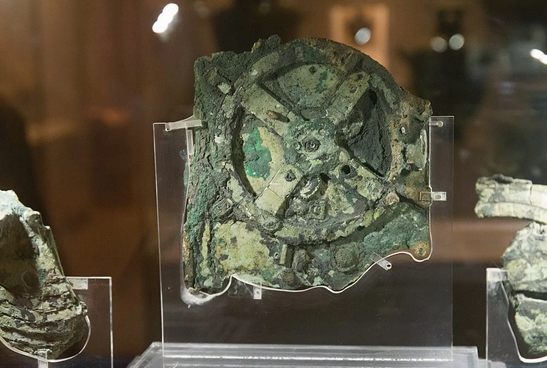
One of the most extraordinary ancient inventions is the Antikythera Mechanism, discovered in a shipwreck off the coast of Greece in 1901. Dating back to around 100 BCE, this intricate device is widely considered the world’s first analog computer.
How It Worked
The mechanism consisted of a complex system of bronze gears and dials housed in a wooden box. It was used to predict astronomical positions and eclipses, track lunar and solar cycles, and even forecast the timing of the Olympic Games.
Why It Was Ahead of Its Time
The level of engineering precision required to construct such a device was not seen again until the development of mechanical clocks in medieval Europe—over a thousand years later. Its existence suggests that ancient Greek scientists possessed a far deeper understanding of mechanics and astronomy than previously believed.
2. Roman Concrete: A Material That Endures Millennia
The durability of structures built during the Roman Empire continues to amaze engineers today. A key reason behind this longevity is Roman concrete, a material that has proven far more resilient than modern concrete.
Composition and Strength
Roman concrete was made using volcanic ash, lime, and seawater. Unlike modern concrete, which tends to degrade over time, Roman concrete actually becomes stronger when exposed to seawater due to chemical reactions that reinforce its structure.
Modern Implications
Scientists are now studying this ancient formula to develop more sustainable and durable construction materials. The fact that Roman structures like aqueducts and harbors still stand today is a testament to the advanced knowledge of materials science in ancient times.
3. Greek Fire: The Mysterious Weapon of Byzantium
During the era of the Byzantine Empire, a fearsome weapon known as Greek Fire was used in naval warfare. This incendiary substance could burn even on water, making it nearly impossible to extinguish.
Secret Formula
The exact composition of Greek Fire remains unknown to this day. It was likely a mixture of petroleum-based compounds, quicklime, and other chemicals.
Military Advantage
Greek Fire gave Byzantine forces a significant edge in battles, especially at sea. Its ability to continue burning on water made it a terrifying weapon against enemy ships.
Why It’s Remarkable
Despite modern advancements in chemistry, the exact formula has been lost, highlighting how some ancient technologies remain beyond our full understanding.
4. The Baghdad Battery: Ancient Electricity?
The Baghdad Battery is a set of artifacts discovered near Baghdad, dating back to around 250 BCE. It consists of a clay jar, a copper cylinder, and an iron rod—components that resemble a simple battery.
Possible Uses
Some researchers believe it may have been used for electroplating metals, while others suggest it could have had medicinal or religious applications.
Controversy
While there is debate about whether it truly functioned as a battery, experiments have shown that similar setups can generate a small electric current.
Significance
If indeed used as a battery, it would indicate that ancient civilizations had knowledge of electricity nearly 2,000 years before modern science formally recognized it.
5. The Pyramids of Giza: Engineering Marvels
The Pyramids of Giza are among the most iconic structures in human history. Built over 4,500 years ago, these massive monuments continue to baffle engineers and archaeologists.
Construction Precision
The alignment of the pyramids with cardinal directions is incredibly precise. The Great Pyramid, in particular, was the tallest man-made structure in the world for over 3,800 years.
Techniques and Tools
Ancient Egyptians used simple tools like copper chisels and wooden sledges, yet managed to transport and position massive stone blocks weighing several tons.
Why They Matter
The scale and precision of the pyramids suggest advanced knowledge of mathematics, geometry, and engineering far beyond what was expected for that era.
6. Ancient Surgical Techniques: Early Medical Innovation
Long before modern medicine, ancient civilizations practiced sophisticated surgical procedures. Evidence from civilizations such as ancient India, Egypt, and Greece shows remarkable medical knowledge.
Sushruta and Surgery
The ancient Indian physician Sushruta, often called the “father of surgery,” described over 300 surgical procedures and 120 surgical instruments in his texts.
Techniques Used
Procedures included cataract surgery, plastic surgery (including nasal reconstruction), and even complex wound treatments.
Legacy
Many of these techniques laid the foundation for modern surgical practices. The precision and understanding required demonstrate a deep knowledge of human anatomy.
7. The Nazca Lines: Massive Geoglyphs Visible from the Sky
Located in Peru, the Nazca Lines are enormous designs etched into the desert floor, depicting animals, plants, and geometric shapes.
Scale and Mystery
Some of these figures are hundreds of meters long and can only be fully appreciated from the air.
Purpose
The exact purpose remains debated. Theories include religious rituals, astronomical calendars, or communication with deities.
Technological Significance
Creating such large and precise designs without aerial perspective suggests advanced planning and surveying techniques.
8. The House of Wisdom: A Hub of Knowledge and Innovation
During the Islamic Golden Age, the House of Wisdom served as a center for learning, translation, and scientific advancement.
Intellectual Contributions
Scholars gathered here translated ancient texts, made original discoveries, and advanced fields such as mathematics, astronomy, and medicine.
Notable Figures
Scholars like Al-Khwarizmi contributed significantly to algebra and algorithms—terms that are still used today.
Impact
The work done at the House of Wisdom preserved ancient knowledge and influenced the Renaissance in Europe centuries later.
Conclusion: Rethinking Ancient Innovation
The technologies explored in this article reveal a powerful truth: ancient civilizations were far more advanced than we often give them credit for. Whether through engineering marvels like the Pyramids, scientific breakthroughs like the Antikythera Mechanism, or intellectual hubs like the House of Wisdom, early humans demonstrated extraordinary creativity and intelligence.
These innovations were not isolated achievements but part of broader systems of knowledge that spanned continents and cultures. They remind us that progress is not always linear—sometimes knowledge is lost, only to be rediscovered centuries later.
Understanding these ancient technologies does more than satisfy historical curiosity. It inspires modern innovation, encourages sustainable practices (as seen with Roman concrete), and highlights the importance of preserving knowledge for future generations.