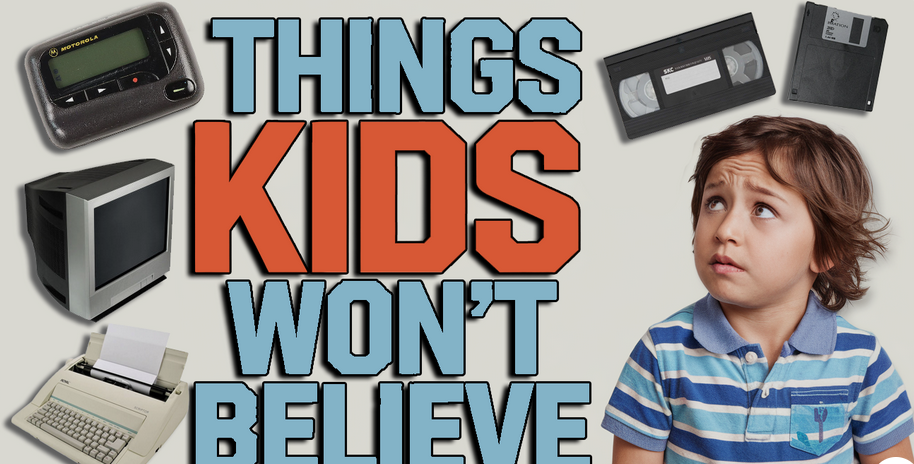
Technology evolves at a relentless pace. What once seemed revolutionary quickly becomes outdated, replaced by faster, smaller, and smarter alternatives. For today’s generation—raised on smartphones, streaming platforms, and cloud computing—many older technologies are not just obsolete but almost unrecognizable. Devices that once defined everyday life now appear as strange relics from a distant past.
This article explores ten such technologies that were once essential but are now largely forgotten by younger generations. Each represents a step in the journey toward the hyper-connected digital world we live in today.
1. Floppy Disks: The Early Storage Solution
Before USB drives and cloud storage, floppy disks were the primary method of saving and transferring data. These thin, square disks came in various sizes, with the 3.5-inch version being the most widely used in the 1990s.
A standard floppy disk could store just 1.44 MB of data—barely enough for a single high-resolution image today. Despite their limited capacity, they were revolutionary at the time. Students used them to carry assignments, and professionals relied on them for essential documents.
Kids today, accustomed to gigabytes and terabytes of storage, often find it amusing that something so small in capacity once held such importance.
2. Cassette Tapes: Music Before Digital Streaming
Long before Spotify and YouTube, music lovers used cassette tapes to enjoy their favorite songs. These compact plastic cases contained magnetic tape that stored audio.
Cassette players required manual operation—rewinding, fast-forwarding, and flipping sides. Making a “mixtape” was a labor of love, requiring careful recording of songs in real time.
While the sound quality was far from perfect, cassette tapes had a unique charm. The tactile experience and personal touch are things digital playlists simply can’t replicate.
3. VHS Tapes and VCRs: The Original Home Theater
Before DVDs and streaming services, watching movies at home meant using VHS tapes and VCRs (Video Cassette Recorders).
These bulky tapes stored movies in analog format. Watching a film required inserting the tape into a VCR and often rewinding it before returning it to a rental store.
Video rental shops were once a staple of communities, where families would browse shelves for their weekend entertainment. Today’s kids, used to instant streaming, would likely find the process slow and inconvenient.
4. Rotary Phones: Dialing with a Twist
Rotary phones were among the earliest household communication devices. Instead of pressing buttons, users dialed numbers by rotating a circular dial.
Each number required turning the dial to a specific position and waiting for it to return. Dialing long numbers could be time-consuming.
In contrast to today’s instant touchscreens and voice assistants, rotary phones demanded patience. Yet they represent a foundational stage in the evolution of communication technology.
5. Pagers: Predecessors to Mobile Phones
Before mobile phones became widespread, pagers were used for quick communication. These small devices received short messages or phone numbers.
When a pager beeped, the user would find a phone and call back the number displayed. It was a simple but effective system, especially for professionals like doctors.
Today’s kids, who can send instant messages, video call, and share media within seconds, might struggle to understand why such a limited device was once so popular.
6. Typewriters: Writing Before Word Processors
Typewriters were the primary writing tools before computers became common. Each key press would physically imprint a letter onto paper.
Mistakes were difficult to correct, often requiring correction fluid or starting over entirely. Despite these challenges, typewriters were widely used in offices, schools, and homes.
Modern word processors offer spell-check, formatting, and instant editing—luxuries that typewriter users never had. The tactile experience of typing on a mechanical device, however, remains unmatched for some enthusiasts.
7. Film Cameras: Photography Without Instant Results
Before digital cameras and smartphones, photography relied on film. Each roll had a limited number of exposures, and photos couldn’t be viewed immediately.
After taking pictures, the film had to be developed in a lab—a process that could take days. Only then could you see whether your shots turned out well.
This limitation made photography more deliberate. People carefully considered each shot, unlike today’s era of unlimited digital photos.
8. Walkmans and Portable CD Players
Portable music wasn’t always as simple as carrying a smartphone. Devices like Walkmans and portable CD players allowed people to listen to music on the go.
Walkmans used cassette tapes, while CD players used compact discs. Both required carrying physical media and were sensitive to movement—CD players, in particular, could skip if shaken.
Despite these limitations, they were groundbreaking in making music portable. Today’s wireless earbuds and streaming apps owe much to these early innovations.
9. Dial-Up Internet: The Sound of the Early Web
Early internet access relied on dial-up connections, which used telephone lines to connect to the web.
Connecting to the internet involved a series of distinctive sounds—beeps and static—as the modem established a connection. Speeds were incredibly slow by today’s standards, often taking minutes to load a single webpage.
Using the internet also meant tying up the phone line, preventing others from making calls. Compared to today’s high-speed broadband and mobile data, dial-up feels almost prehistoric.
10. Overhead Projectors: Classroom Technology of the Past
Before digital projectors and smartboards, classrooms used overhead projectors to display information.
Teachers placed transparent sheets on a glass surface, and the projector would cast the image onto a screen. Notes were often written by hand during the lesson.
While simple, this method required preparation and lacked the flexibility of modern digital tools. Today’s interactive displays and online resources have transformed education in ways that older generations could hardly imagine.
The Shift from Physical to Digital
One common theme among these technologies is the transition from physical to digital formats. Floppy disks, cassette tapes, VHS tapes, and film all required tangible media. Modern technology, on the other hand, relies heavily on digital storage and cloud-based systems.
This shift has brought incredible convenience, allowing users to access vast amounts of data instantly. However, it has also reduced the tactile and physical experiences that once defined technology use.
Why These Technologies Matter
Although these devices are no longer in everyday use, they played a crucial role in shaping the modern world. Each innovation built upon the last, paving the way for today’s advanced technologies.
Understanding these older tools provides valuable perspective. It highlights how far we’ve come and reminds us that today’s cutting-edge devices may one day seem just as outdated.
The Nostalgia Factor
For older generations, these technologies evoke a sense of nostalgia. They represent simpler times and memorable experiences—rewinding a favorite song, waiting for photos to develop, or hearing the dial-up tone.
Interestingly, some of these technologies are making a comeback in niche markets. Vinyl records, for example, have regained popularity among music enthusiasts who appreciate their analog sound.
The Perspective of Today’s Kids
Children growing up in the digital age often view these technologies as curiosities rather than necessities. To them, the idea of limited storage, manual processes, and delayed results can seem almost unimaginable.
This generational gap highlights the rapid pace of technological change. What was once cutting-edge can become obsolete within a few decades—or even years.
Lessons from the Past
Old technologies teach us important lessons about innovation, adaptability, and the human desire for progress. They show how limitations can inspire creativity and how each generation builds upon the achievements of the previous one.
They also remind us to appreciate the convenience we often take for granted. Instant communication, unlimited storage, and high-speed internet are luxuries that were once unimaginable.
Conclusion
The technologies discussed in this article may no longer be part of daily life, but their impact is undeniable. They represent milestones in the evolution of communication, entertainment, and productivity.
For kids today, these devices might seem like relics from another world. But understanding them offers a deeper appreciation of how technology has evolved—and where it might go next.
As innovation continues, today’s cutting-edge tools will eventually join this list of forgotten technologies, reminding future generations of how quickly the world can change.